A1.1 · Lección 007

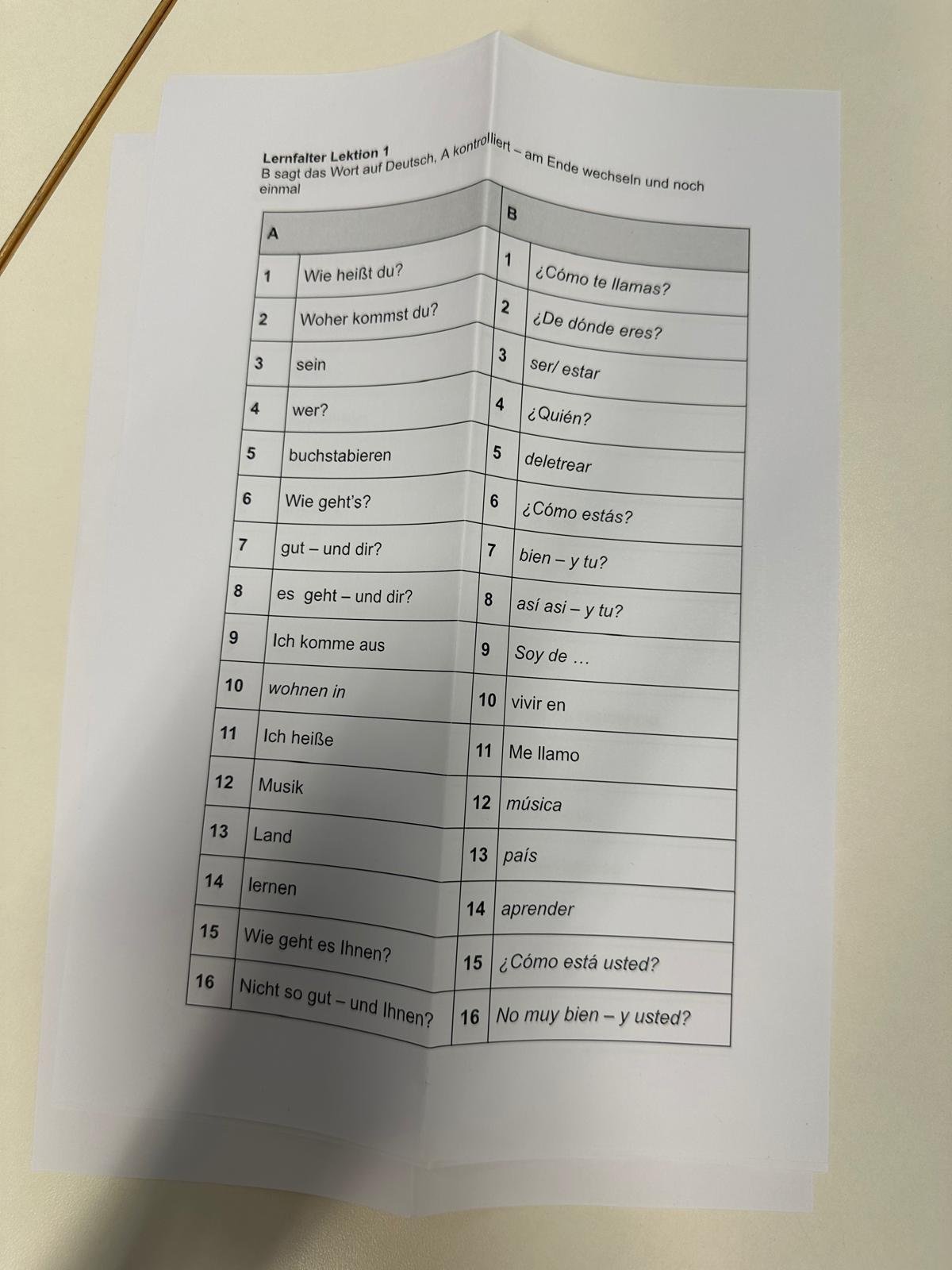
Repaso A1.1 — Lernfalter Lektionen 1-9

Wortschatz und Grammatik A1.1

Vocabulario de presentaciones, datos personales, familia, compras, colores, tiempo libre, citas y el verbo mögen. Incluye formal (Sie) e informal (du).
Tus fotos

Vocabulario

Verbos
sein
ser / estar
📢 sain

Verbo muy importante: Ich bin, du bist…

Otros
buchstabieren
deletrear
📢 buj-shta-bi-RÍ-ren
Otros
lernen
aprender
📢 LÉR-nen
Verbos
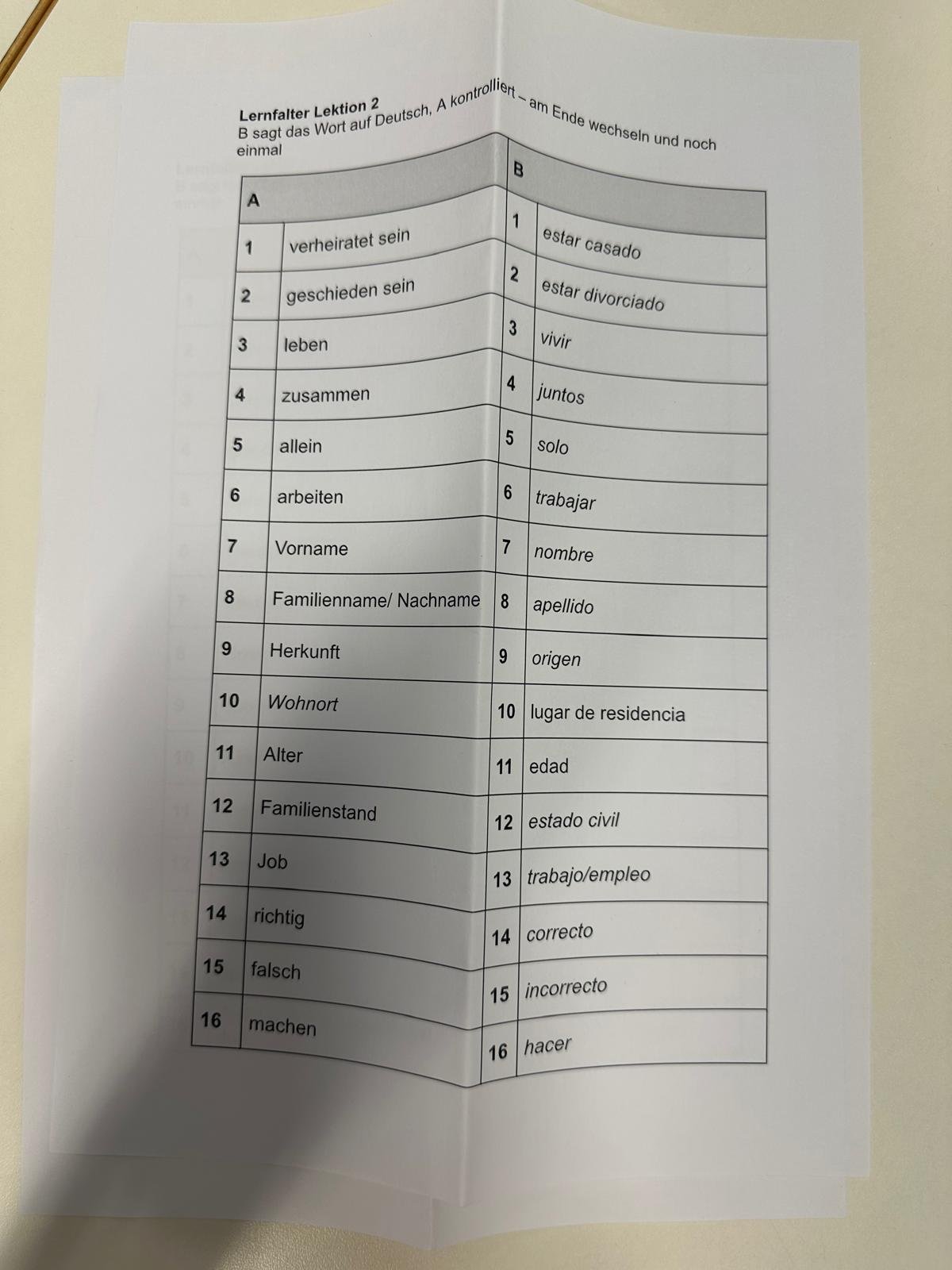
geschieden sein
estar divorciado/a
📢 gue-SHÍ-den sain
Otros
Vorname
nombre (de pila)
📢 FÓR-na-me

Nachname = apellido.

Otros
Herkunft
origen
📢 JÉR-kunft
Otros
Wohnort
lugar de residencia
📢 VÓ-nort
Familia
Familienstand
estado civil
📢 fa-MÍ-lien-shtant
Familia
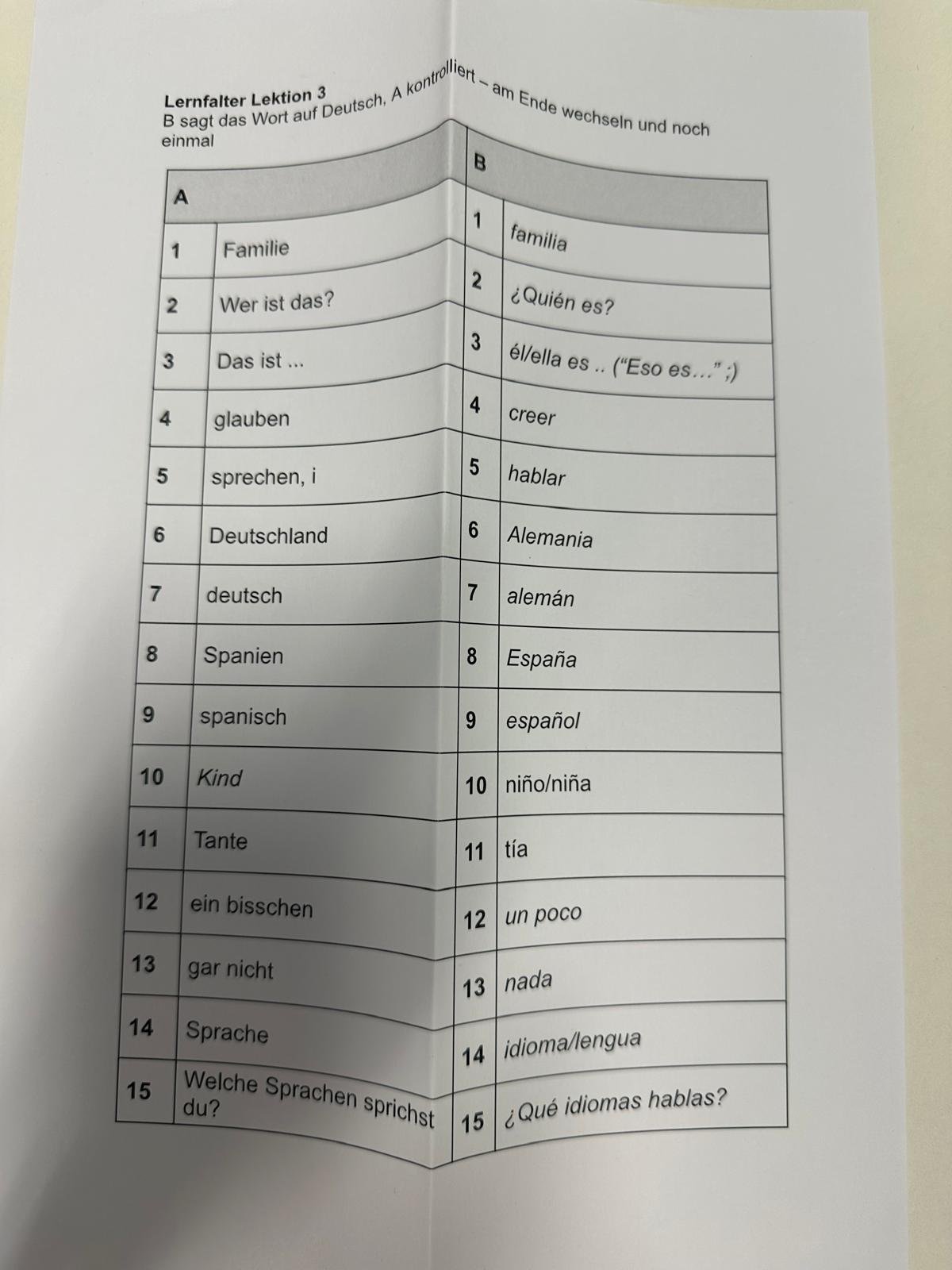
Familie
familia
📢 fa-MÍ-li-e

die Familie (femenino).

Otros
Das ist …
Eso es… / Es…
📢 das ist

Para presentar personas.

Verbos
sprechen
hablar
📢 SHPRÉ-jen

Irregular: du sprichst, er spricht.

Países
Deutschland
Alemania
📢 DOITsh-lant
Países
Spanien
España
📢 shpa-NÍEN
Otros
ein bisschen
un poco
📢 ain BÍ-shen

gar nicht = nada / en absoluto.

Otros
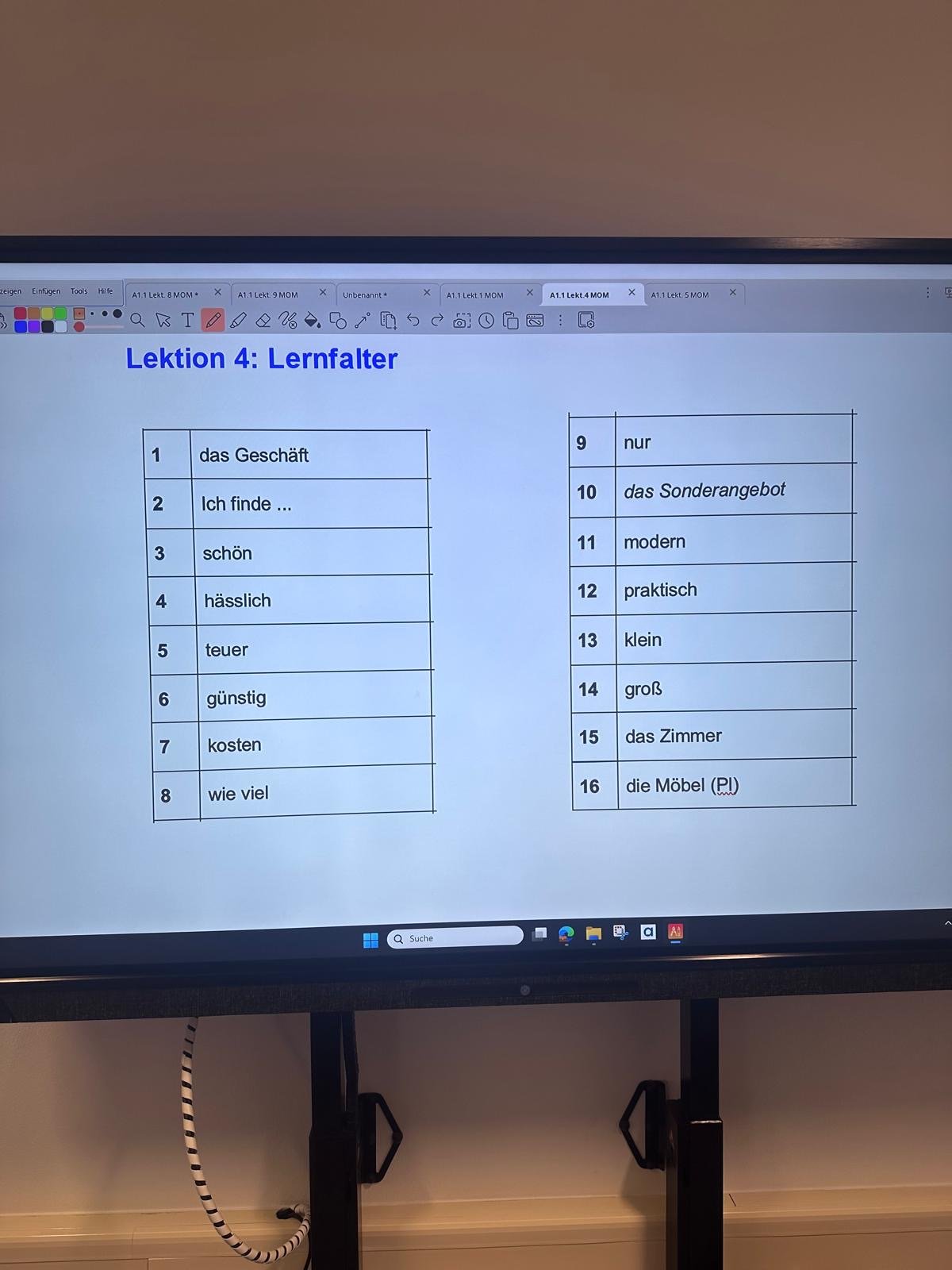
das Geschäft
la tienda
📢 das gue-SHÉFT

Neutro: das.

Otros
schön
bonito/a
📢 shön

hässlich = feo; teuer = caro; günstig = barato.

Otros
wie viel
cuánto
📢 ví fiil

kosten = costar.

Otros
das Sonderangebot
oferta especial
📢 das ZÓN-der-an-ge-bot

nur = solo / solamente.

Otros
die Möbel
muebles
📢 dí MÖ-bel

Siempre plural.

Otros
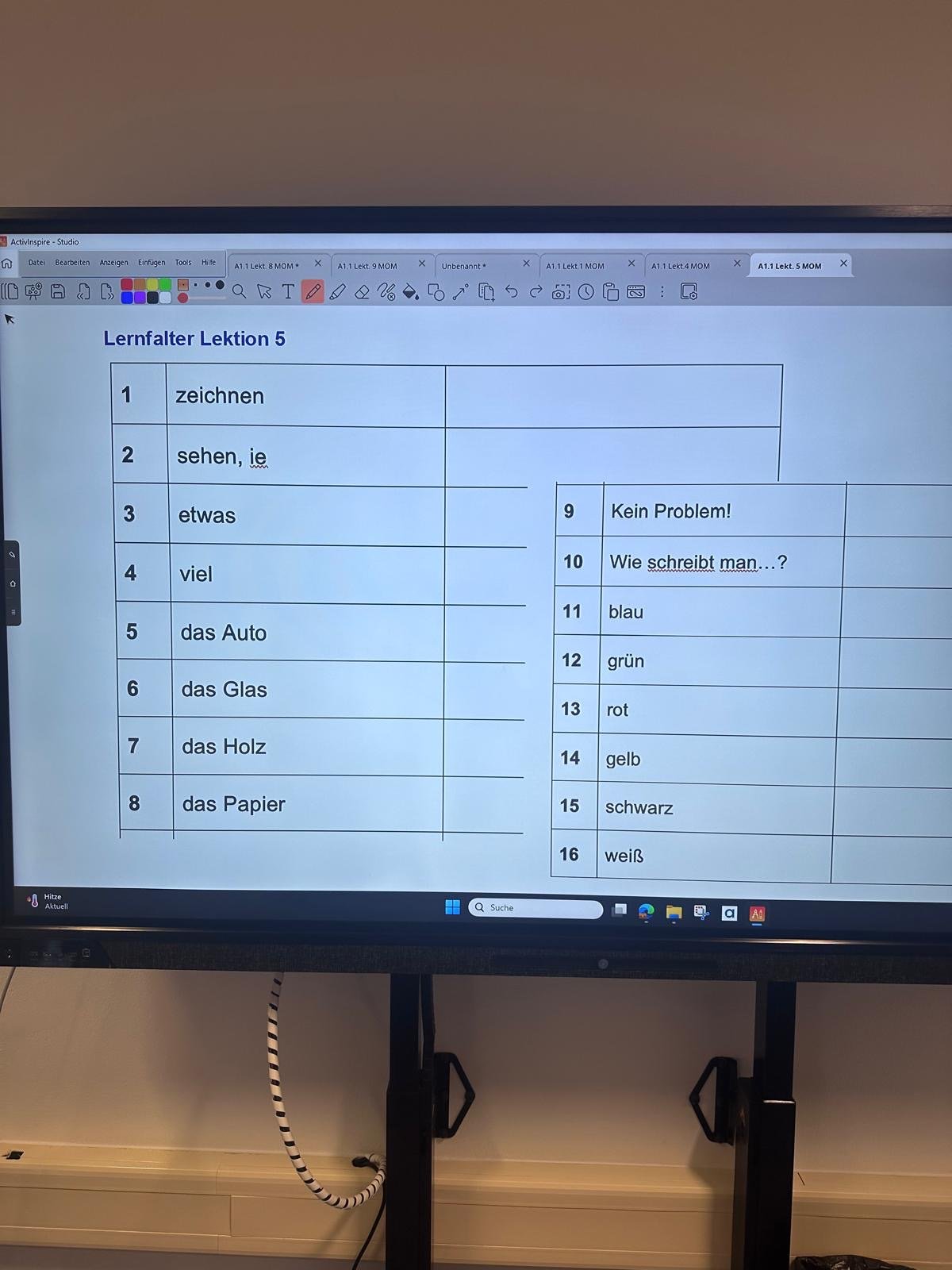
blau
azul
📢 blau

grün, rot, gelb, schwarz, weiß.

Otros
Kein Problem!
¡No hay problema!
📢 kain pro-BLÉM
Preguntas
Wie schreibt man …?
¿Cómo se escribe…?
📢 ví shráipt man
Otros
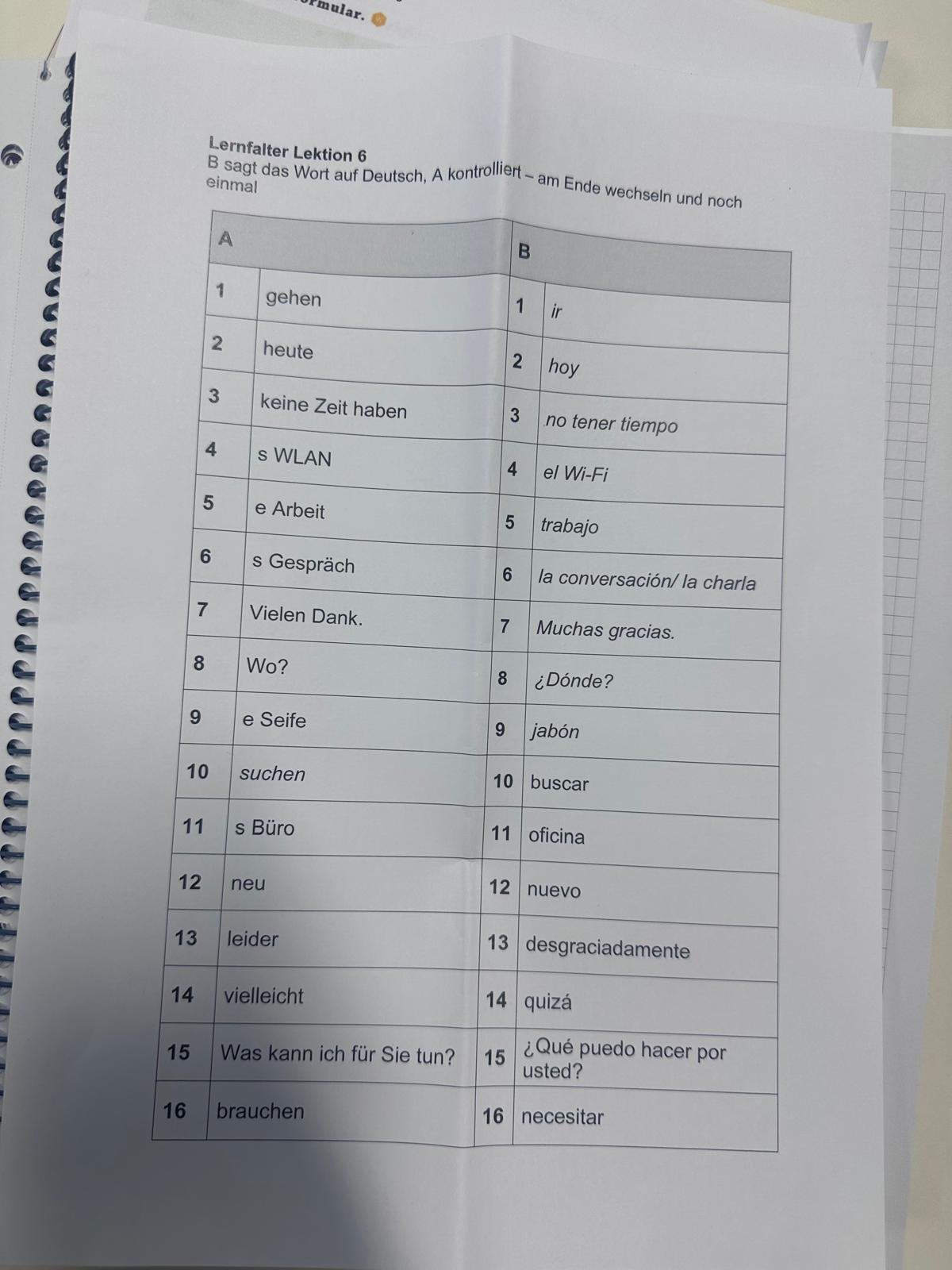
heute
hoy
📢 HOI-te
Otros
Vielen Dank.
Muchas gracias.
📢 FÍ-len dank

Formal e informal sirven en tienda.

Preguntas
Was kann ich für Sie tun?
¿Qué puedo hacer por usted?
📢 vas kan ij fur zí tun

Frase de dependiente en tienda (Sie).

Otros
brauchen
necesitar
📢 BRÁU-jen
Otros
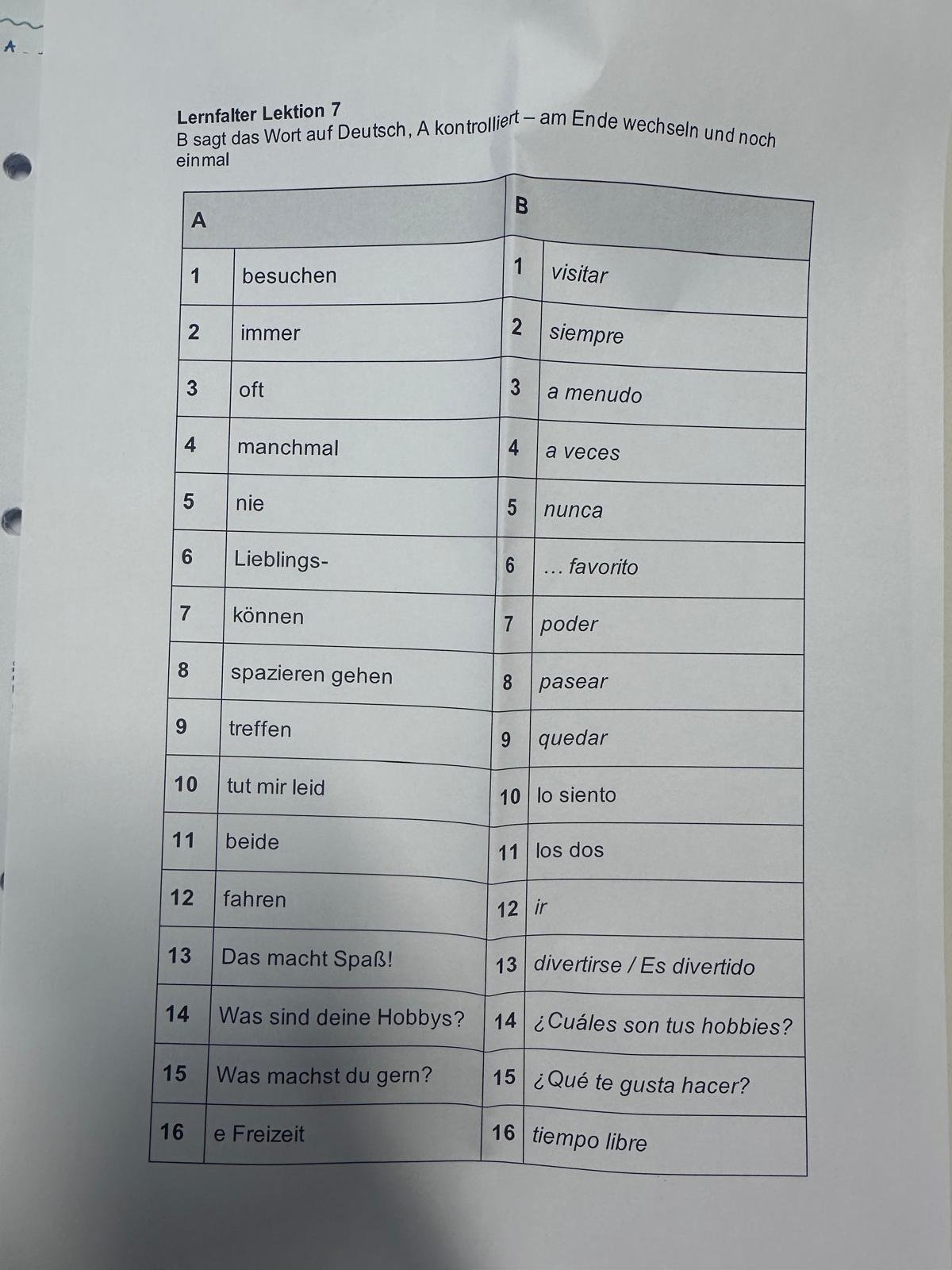
immer
siempre
📢 Í-mer

oft = a menudo; manchmal = a veces; nie = nunca.

Otros
können
poder
📢 KÓ-nen

Verbo modal.

Otros
tut mir leid
lo siento
📢 tut mir lait

Das macht Spaß! = ¡Es divertido!

Otros
die Freizeit
tiempo libre
📢 dí FRÁI-tsait

Lieblings- = favorito (Lieblingsort).

Otros
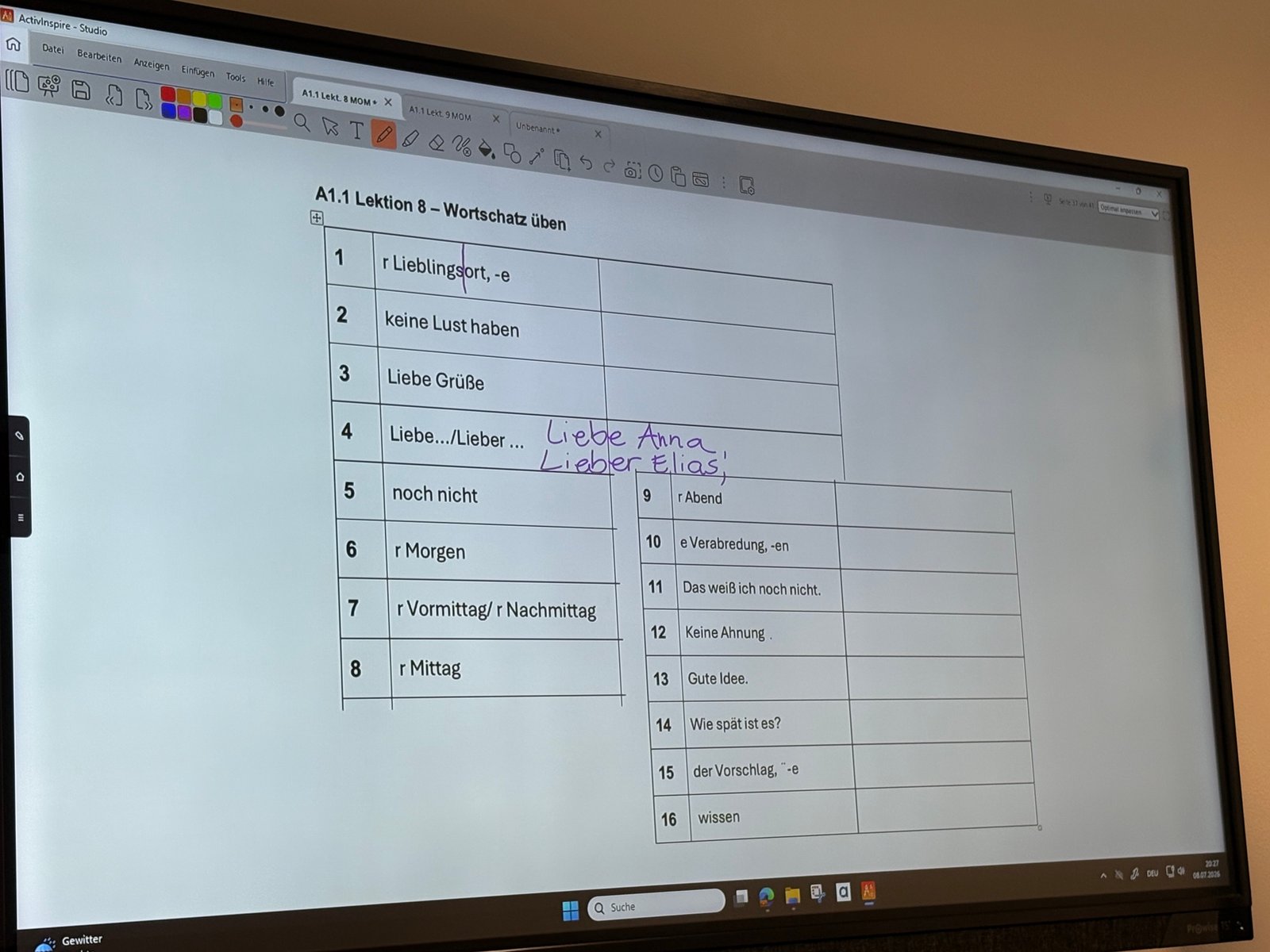
der Lieblingsort
lugar favorito
📢 der LÍP-lings-ort

der Morgen, der Vormittag, der Nachmittag, der Abend.

Saludos
Liebe Grüße
Un saludo cariñoso / Atentamente (informal)
📢 LÍ-be grü-se

Liebe Anna / Lieber Elias al inicio del email.

Otros
noch nicht
todavía no
📢 noj nijt

Das weiß ich noch nicht. = Aún no lo sé.

Otros
Keine Ahnung.
Ni idea.
📢 KÁI-ne Á-nung

Muy informal.

Otros
Gute Idee.
Buena idea.
📢 GÚ-te i-DÉ-e
Otros
die Verabredung
cita / quedada
📢 dí fer-a-BRE-dung

der Vorschlag = la propuesta.

Otros
wissen
saber (un hecho)
📢 VÍ-sen

kennen = conocer (personas/lugares).

Verbos
gerne
con gusto / gustar (con verbo)
📢 GÉR-ne

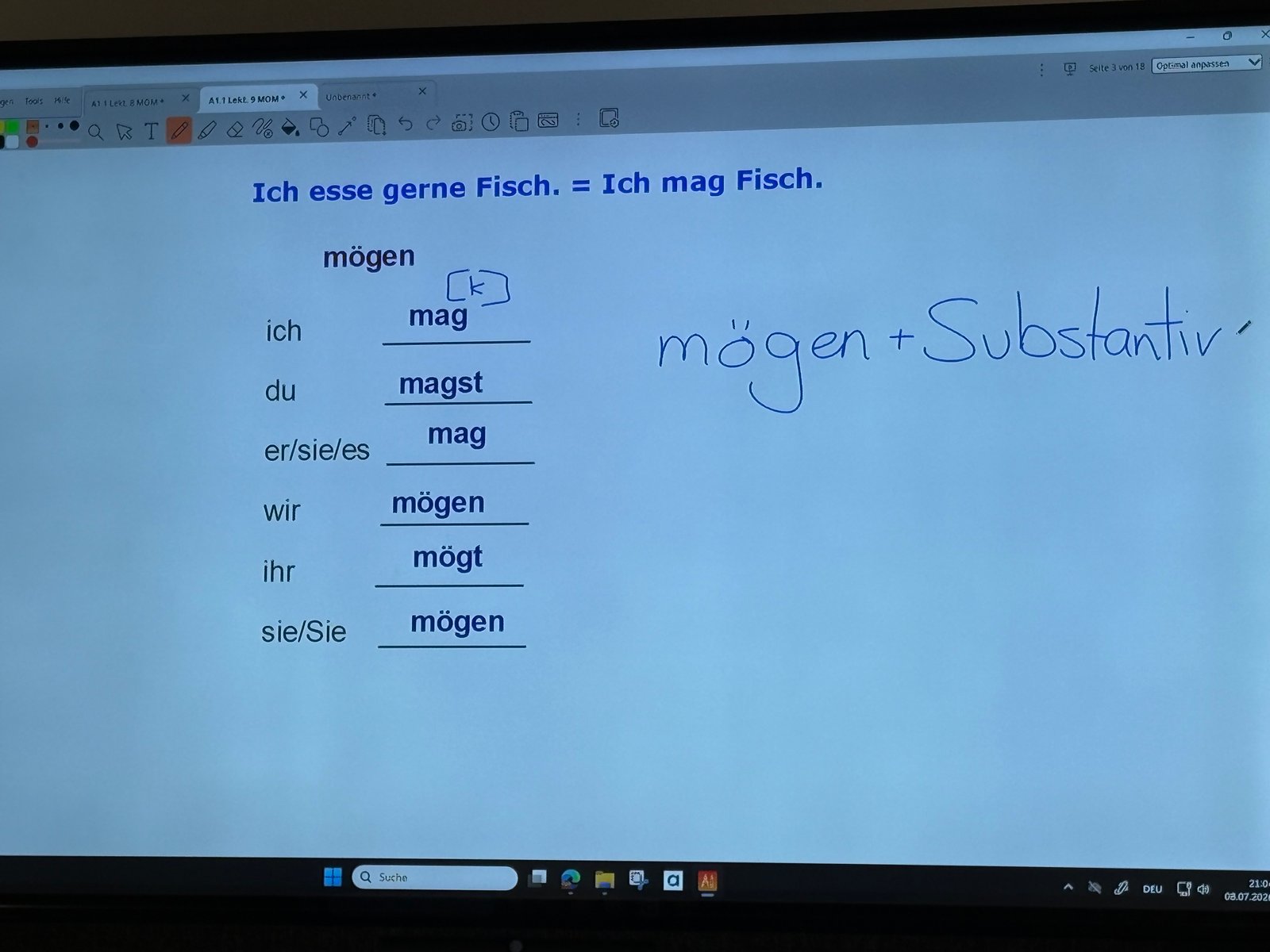
Verbo + gerne = mögen + sustantivo.

Diálogos du / Sie

Preguntas y respuestas · du / Sie

Gramática

Formal (Sie) vs informal (du)

Con amigos y familia usas du (Wie heißt du?, Wie geht's?). Con desconocidos, profesores o en tiendas usas Sie (Wie heißen Sie?, Wie geht es Ihnen?). Los verbos cambian: du kommst → Sie kommen; dir → Ihnen.

  • Wie geht's? – Gut, und dir? — ¿Cómo estás? – Bien, ¿y tú? (ví guets – gut, unt dir)
  • Wie geht es Ihnen? – Nicht so gut, und Ihnen? — ¿Cómo está usted? – No muy bien, ¿y usted? (ví guet es Í-nen – nijt so gut, unt Í-nen)

sein + adjetivo (estado civil)

Para decir tu estado civil: sein + adjetivo. Ich bin verheiratet (casado/a), Ich bin geschieden (divorciado/a).

  • Ich bin verheiratet. — Estoy casado/a. (ij bin fer-jai-RA-tet)
  • Ich bin geschieden. — Estoy divorciado/a. (ij bin gue-SHÍ-den)

Verbo sprechen (irregular)

sprechen cambia la vocal en du y er/sie/es: du sprichst, er/sie/es spricht. Ich spreche, wir sprechen.

  • Ich spreche Deutsch. — Hablo alemán. (ij SHPRÉ-je DOITsh)
  • Sprichst du Spanisch? — ¿Hablas español? (shpríjst tú shpa-NÍSH)

Adverbios de frecuencia

Van normalmente después del verbo: immer (siempre), oft (a menudo), manchmal (a veces), nie (nunca).

  • Ich gehe oft spazieren. — Paseo a menudo. (ij GUÉ-e oft shpa-tsi-RÍ-ren)
  • Ich besuche manchmal meine Tante. — A veces visito a mi tía. (ij be-ZÚ-she MÁNJ-mal MÁI-ne TÁN-te)

Verbo mögen (gustar)

mögen + sustantivo = gustar algo. Ich mag Fisch. Conjugación irregular: ich/er mag, du magst, wir/sie mögen. Equivale a verbo + gerne: Ich esse gerne Fisch.

  • Ich mag Fisch. — Me gusta el pescado. (ij mak fish)
  • Ich esse gerne Fisch. — Me gusta comer pescado. (ij É-se GÉR-ne fish)
  • Du magst Musik. — Te gusta la música. (tú makst mu-ZÍK)

Artículos der / die / das

Masculino der (der Morgen, der Abend), femenino die (die Arbeit, die Freizeit), neutro das (das Geschäft, das Büro). En los apuntes: r = der, e = die, s = das.

  • der Lieblingsort — el lugar favorito (der LÍP-lings-ort)
  • die Verabredung — la cita (dí fer-a-BRE-dung)
  • das Geschäft — la tienda (das gue-SHÉFT)

Práctica

1. ¿Cómo preguntas «¿Cómo te llamas?» de forma informal?

Wie heißt du? — ¿Cómo te llamas? (ví jait tú)

2. ¿Cómo respondes «Me llamo Carlos»?

Ich heiße Carlos. — Me llamo Carlos. (ij jái-se KÁR-los)

3. ¿Cómo preguntas «¿Cómo está usted?» formalmente?

Wie geht es Ihnen? — ¿Cómo está usted? (ví guet es Í-nen)

4. ¿Cómo dices «Soy de España»?

Ich komme aus Spanien. — Soy de España. (ij KÓ-me aus shpa-NÍEN)

5. ¿Cómo preguntas «¿Qué idiomas hablas?» (informal)?

Welche Sprachen sprichst du? — ¿Qué idiomas hablas? (VÉL-je SHPRÁ-jen shpríjst tú)

6. ¿Cómo dices «Estoy casado»?

Ich bin verheiratet. — Estoy casado/a. (ij bin fer-jai-RA-tet)

7. Traduce: «¿Quién es? – Es mi tía.»

Wer ist das? – Das ist meine Tante. — ¿Quién es? – Es mi tía. (ver ist das – das ist MÁI-ne TÁN-te)

8. ¿Cómo preguntas «¿Qué hora es?»?

Wie spät ist es? — ¿Qué hora es? (ví shpét ist es)

9. ¿Cómo dices «Muchas gracias»?

Vielen Dank. — Muchas gracias. (FÍ-len dank)

10. ¿Frase formal de dependiente: «¿Qué puedo hacer por usted?»?

Was kann ich für Sie tun? — ¿Qué puedo hacer por usted? (vas kan ij fur zí tun)

11. ¿Cómo dices «Me gusta el pescado» con mögen?

Ich mag Fisch. — Me gusta el pescado. (ij mak fish)

12. Conjuga mögen para «yo»:

ich mag — yo gusto / me gusta (ij mak)

13. ¿Cómo dices «Ni idea»?

Keine Ahnung. — Ni idea. (KÁI-ne Á-nung)

14. ¿Pregunta informal sobre hobbies?

Was sind deine Hobbys? — ¿Cuáles son tus hobbies? (vas zint DÁI-ne HÓ-bis)

15. ¿Cómo dices «No tengo ganas»?

Ich habe keine Lust. — No tengo ganas. (ij HÁ-be KÁI-ne lust)